Death is a subject most people avoid, yet it is the one appointment none of us can cancel. What happens in those moments after we breathe our last breath? And if there truly is a God who sees all things, what are the questions God asks after death? These are not abstract questions. They are deeply personal, and how you answer them now may be the most important thing you ever do.
What the Bible Says About Life After Death
Scripture does not leave us guessing. Epistle to the Hebrews 9:27 plainly states, “God appoints each person to die once, and after that comes judgment.” This verse alone establishes two certainties: physical death is unavoidable, and accountability before God follows it.
The Bible describes death not as the end of existence but as a transition. For believers, Paul describes it as being “away from the body and at home with the Lord” (2 Corinthians 5:8). For those who have rejected God, Revelation 20:11 to 15 describes the Great White Throne judgment, where every person stands before God with their life laid bare. There is no hiding, no second chance to rewrite your story. Judgment day in the Bible is presented not as a myth but as a fixed reality on the horizon of every human life.
Understanding this is not meant to terrify you. It is meant to wake you up to what truly matters. If you want to go deeper into what Scripture teaches on this subject, Life After Death: What the Bible Reveals offers a thorough and grounded look at the full arc of biblical teaching on eternity.
The Two Questions God Asks After Death
While the Bible does not give us a word-for-word transcript of a divine courtroom scene, theologians and Bible scholars have long recognized that Scripture points to two central areas of accountability before God. These have been summarized as two questions every soul must reckon with when considering the questions God asks after death.
The first question: What did you do with Jesus Christ?
This is the question that determines eternity. In John 14:6, Jesus says, “I am the way, and the truth, and the life. No one comes to the Father except through me.” Salvation is not earned through good behavior or religious effort. It hinges on a response to the person of Jesus. Did you hear His name and turn away? Did you live as if He did not exist? Or did you, in humility and faith, receive the grace He offered through His death and resurrection?
This is the most urgent of the questions God asks after death, because your answer shapes everything else.
The second question: What did you do with what I gave you?
This question speaks to stewardship. Matthew 25 tells the parable of the talents, where a master entrusts servants with resources and returns to settle accounts. The faithful servants are celebrated. The one who buried his gift out of fear is rebuked. Every person receives something from God: time, ability, influence, relationships, resources. The question is not whether you received much or little. The question is whether you were faithful with what you had. This theme of faithfulness connects deeply to a subject worth exploring on its own: What to Do With Your God-Given Gifts, which we will be covering in an upcoming post.
Together, these two questions form the frame of all judgment day in the Bible, explained through Scripture. One addresses your relationship with the Savior. The other addresses your response to His calling.
The Weight of Accountability Before God
We live in a culture that bristles at the idea of being held to account. But accountability before God is not a threat. It is a mercy wrapped in seriousness. It means your choices matter. Your life is not meaningless. Every act of love, every moment of faithfulness, every quiet sacrifice you made when no one was watching was seen.
It also means that every moment of willful rebellion, every ignored prompting of conscience, every time you knew the right thing and chose otherwise, that too was recorded. Not for the purpose of shame, but to make clear that God takes your life seriously even when you do not.
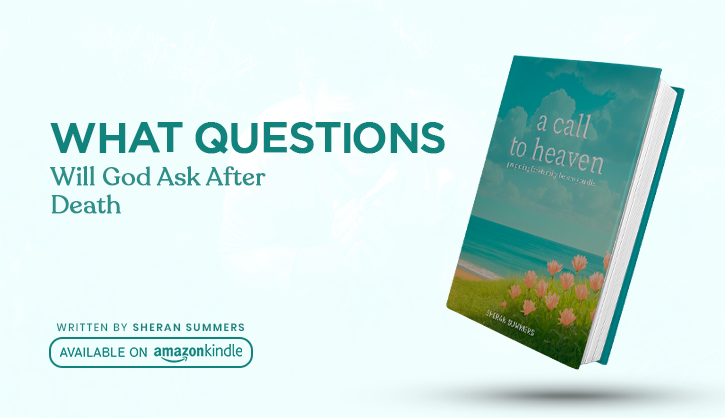
This is precisely what Sheran Summers explores in A Call to Heaven by Sheran Summers, a book that walks readers through what the Bible genuinely reveals about eternity, the nature of God’s judgment, and the breathtaking hope available to those who respond to the gospel. If you are wrestling with what will God say when you die and what the afterlife truly looks like, it is a deeply grounding and compassionate read.
Loss and grief can also make these questions feel more immediate and overwhelming. If you are walking through that kind of pain, How to Grieve with Faith is a resource that speaks directly to holding onto God when eternity feels heavy on your heart.
What Happens to Those Who Are Unprepared
The urgency of salvation in Christianity is not a scare tactic. It is a loving warning from a God who does not want anyone to be caught unprepared. Judgment day in the Bible, explained through passages like Revelation 20 and 2 Corinthians 5:10, makes it clear that every person will give an account. What will God say when you die if you never responded to His grace? Scripture is sobering: those who have not accepted Christ face what the Bible calls the second death, a permanent separation from God.
But this is not where the story has to end for you. Romans 10:9 says that if you confess with your mouth that Jesus is Lord and believe in your heart that God raised Him from the dead, you will be saved. That door is open right now. Accountability before God, understood rightly, is not a sentence. It is an invitation to come before Him now, while there is still time.
Be Ready for Heaven Today
The questions God asks after death do not have to catch you off guard. You can begin answering them today. Start with the first: Have you genuinely surrendered your life to Jesus Christ? Then ask yourself the second daily: am I using my time, my gifts, and my relationships in ways that reflect the One who gave them to me?
A Call to Heaven by Sheran Summers offers a particularly helpful perspective here, framing eternal readiness not as a burden but as a joyful orientation of the soul toward what is truly lasting.
What will God say when you die? The hope of Scripture is that for those who trusted Christ, the answer will echo Matthew 25:23: “Well done, good and faithful servant.” That is not just a theological concept. It can be your story. Take a moment today to reflect on where you stand before God, not out of fear, but out of the quiet, serious hope that comes from knowing eternity is real and His grace is still available to you.
Frequently Asked Questions
Q1: What are the questions God asks after death?
Scripture points to two key areas of accountability: what you did with Jesus Christ and what you did with what God entrusted to you. The first addresses salvation through faith in Christ. The second addresses faithfulness in how you used your God-given gifts, time, and resources during your life.
Q2: Is judgment day in the Bible a literal event?
Yes. The Bible describes multiple judgments, including the Great White Throne judgment in Revelation 20 and the Judgment Seat of Christ in 2 Corinthians 5:10. These are presented as literal, future events where all people will give an account of their lives before God. Judgment day in the Bible, explained through these passages, leaves little room for ambiguity.
Q3: What will God say when you die if you were not a believer?
Scripture is sobering on this point. Those who have not accepted Christ as Savior face what the Bible calls the second death, which is separation from God (Revelation 20:14 to 15). This is why the urgency of the gospel matters so deeply.
Q4: How does accountability before God affect how Christians should live now?
It means that daily choices carry eternal weight. Christians are called to steward their time, gifts, and relationships with intention. Knowing that life is a trust given by God should shape every decision, from how we treat people to how we spend our hours.
Q5: Can a person prepare for eternity before they die?
Absolutely. The Bible is clear that salvation is available to anyone who repents and trusts in Jesus Christ. Preparation begins with that decision and continues in daily faithfulness. Resources like Life After Death: What the Bible Reveals can help ground your understanding in Scripture.
Q6: Does a good life guarantee a favorable outcome on judgment day?
No. The Bible is clear that salvation comes by grace through faith, not by works (Ephesians 2:8 to 9). Good deeds flow from a transformed heart, but they cannot earn salvation. The question is not how good you were, but whether you placed your trust in the one who is perfectly good: Jesus Christ.